Illinois commercial electricity costs are rising, and the increases are structural rather than seasonal. The main driver is not fuel. It is capacity: the charges utilities pay through the PJM and MISO markets to guarantee enough power is available at peak demand. Those charges spiked at the 2025 PJM capacity auction, started flowing into ComEd and Ameren bills in June 2025, and are filed to step up again in June 2026. For a manufacturer on a demand-metered rate, this is the part of the bill that has grown fastest, and it is the part on-site generation can actually move.
ComEd's summer 2025 default supply price reached 10.03 cents per kWh, and ComEd's April 2026 filing to the Illinois Commerce Commission proposes a summer 2026 supply charge about 12 percent higher again. The Citizens Utility Board has warned that total ComEd bills could rise another 20 to 25 percent starting June 2026 as new PJM capacity prices take effect.
- 1 Illinois commercial power costs are climbing for structural reasons (PJM and MISO capacity markets plus fast-growing data center load in northern Illinois), not a one-time seasonal bump.
- 2 ComEd's capacity-driven charges rose in June 2025 and are filed to rise again about 12 percent in summer 2026. Ameren's all-in residential rates are up roughly 94 percent since 2021, with summer supply swinging into the low-teens of cents per kWh.
- 3 CRGA, signed January 2026, is the state's response (3 GW of storage by 2030, virtual power plants, time-of-use pricing). Most of that relief lands medium-term. Near-term exposure through at least mid-2027 remains.
- 4 The one cost lever a manufacturer controls directly is behind-the-meter generation. On-site solar and storage cut the demand and capacity portions of the bill. The July 4, 2026 federal begin-construction deadline has passed, and the 30 percent credit remains fully available for a project starting now, on a December 31, 2027 placed-in-service deadline instead of the longer runway available to projects that started earlier.
What Is Actually Driving Illinois Commercial Power Costs Up
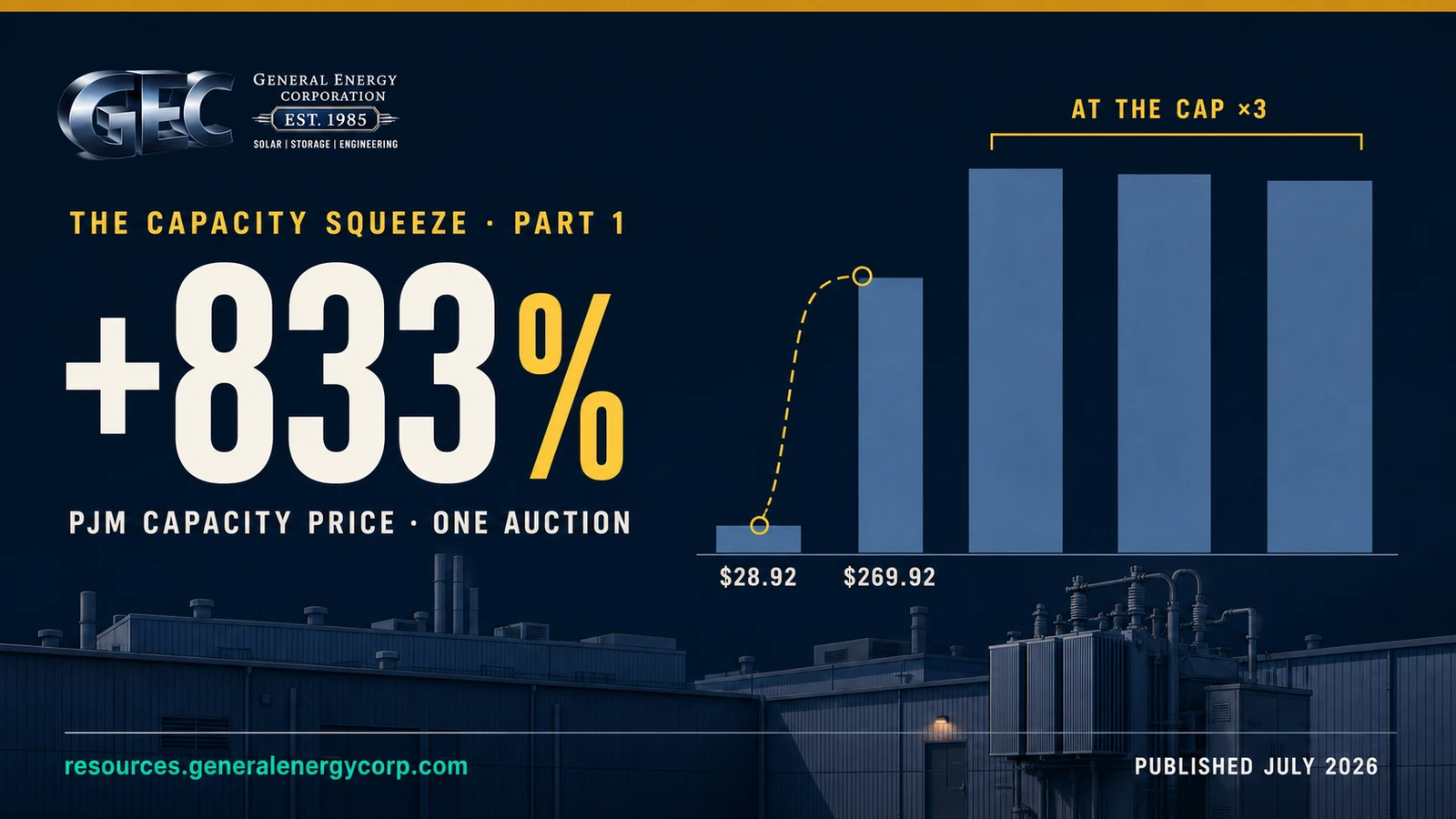
A commercial electric bill has two big pieces: the energy you consume (measured in kilowatt-hours) and the capacity and demand charges tied to how much power you draw at peak. The piece climbing fastest in Illinois is the second one. Capacity is the cost of keeping enough generation on standby to meet the highest demand moments of the year. PJM Interconnection sets that price for northern Illinois through an annual auction, and MISO does the same for the downstate Ameren footprint. When the auction clears high, every utility in the region pays more, and that cost lands in commercial bills.
Three forces are pushing Illinois capacity and supply costs higher at the same time:
- PJM capacity prices jumped roughly elevenfold for the ComEd zone. At the 2025 capacity auction, clearing prices for the ComEd locational area moved from $28.92 to $329.17 per megawatt-day. That increase flows directly into the supply and capacity components of ComEd-area commercial bills.
- Data center load is growing fast in northern Illinois. New data center demand on the ComEd grid raises peak load and the amount of capacity the region has to procure. More peak demand chasing the same grid pushes capacity prices, and therefore rates, higher.
- Capacity charges hit hardest in summer. Seasonal capacity and demand charges concentrate in the summer months, which is why both ComEd and Ameren commercial rates step up between June and September rather than staying flat across the year.
ComEd Territory: What Changed in 2025 and What Is Filed for 2026
ComEd's default supply price (the Price to Compare) reached 10.03 cents per kWh for summer 2025, from June through September, before easing to about 9.69 cents for the non-summer months. The June 2025 increase was driven by supply and capacity costs rather than delivery, and it traced directly back to the record PJM capacity auction and rising regional demand. For a typical customer that meant a 10 to 15 percent jump in the total bill.
The pressure has not let up heading into 2026. The Illinois Commerce Commission approved a $243 million ComEd delivery rate increase effective January 2026. Then, in an April 2026 filing to the ICC, ComEd proposed a summer 2026 supply charge about 12 percent higher than the current one, a direct reflection of the higher PJM capacity prices entering the 2026 to 2027 delivery year. The Citizens Utility Board has warned that the combined effect could add another 20 to 25 percent to ComEd bills starting June 2026.
Large commercial and industrial facilities usually buy their supply competitively rather than on ComEd's default Price to Compare, so they are not capped by the residential supply rate. But the same PJM capacity prices are embedded in competitive supply offers and in the capacity tags assigned to demand-metered accounts. A bigger plant does not avoid the capacity increase. It often feels it more directly through its demand charges.
Ameren Territory: The Downstate Picture
Downstate, Ameren Illinois customers face a parallel squeeze driven by the MISO capacity market. Ameren's standard supply rate sits around 8.77 cents per kWh for the first block of usage, but the all-in residential rate has risen to roughly 15.5 cents, up about 94 percent since 2021. In the summer, all-in rates climb toward 20 cents per kWh, and the supply portion historically swings from the high-single-digits into the low-teens of cents per kWh as seasonal capacity charges take effect.
For a downstate manufacturer, the pattern is the same as in ComEd territory even though the market operator differs: the fastest-growing part of the bill is capacity, it concentrates in summer, and it is largely outside the facility's control unless the facility changes how much grid power it draws at peak.
On a demand-metered commercial account in Illinois, demand and capacity charges often make up 30 to 60 percent of the total electric bill. They are billed on peak kilowatts and capacity tags, not just on energy consumed. This is the portion rising fastest, and it is the portion that on-site solar paired with battery storage is specifically built to reduce.
CRGA Is Real Relief, but Most of It Lands Later
Illinois has responded to the capacity-cost problem. The Clean and Reliable Grid Affordability Act (CRGA) was signed into law on January 8, 2026 and takes effect June 1, 2026. It directs the state to procure 3 gigawatts of grid-scale battery storage by 2030, requires ComEd and Ameren to stand up virtual power plant and demand-response programs, introduces time-of-use pricing, and creates a statewide integrated resource planning process. The Illinois Power Agency estimates the package could deliver more than $13 billion in consumer savings over 20 years.
That is genuine, and it improves the long-run backdrop for behind-the-meter generation. But the timeline matters. The storage targets run to 2030, the renewable build-out to 2035, and the savings projection is a 20-year figure. In the near term, through at least mid-2027, ComEd and Ameren customers remain exposed to the elevated PJM and MISO capacity prices already baked into the 2025 to 2026 and 2026 to 2027 rate structures. CRGA is a reason to expect relief eventually. It is not a reason to wait, because the costs are rising now and the relief is mostly later.
The One Cost Lever a Manufacturer Actually Controls
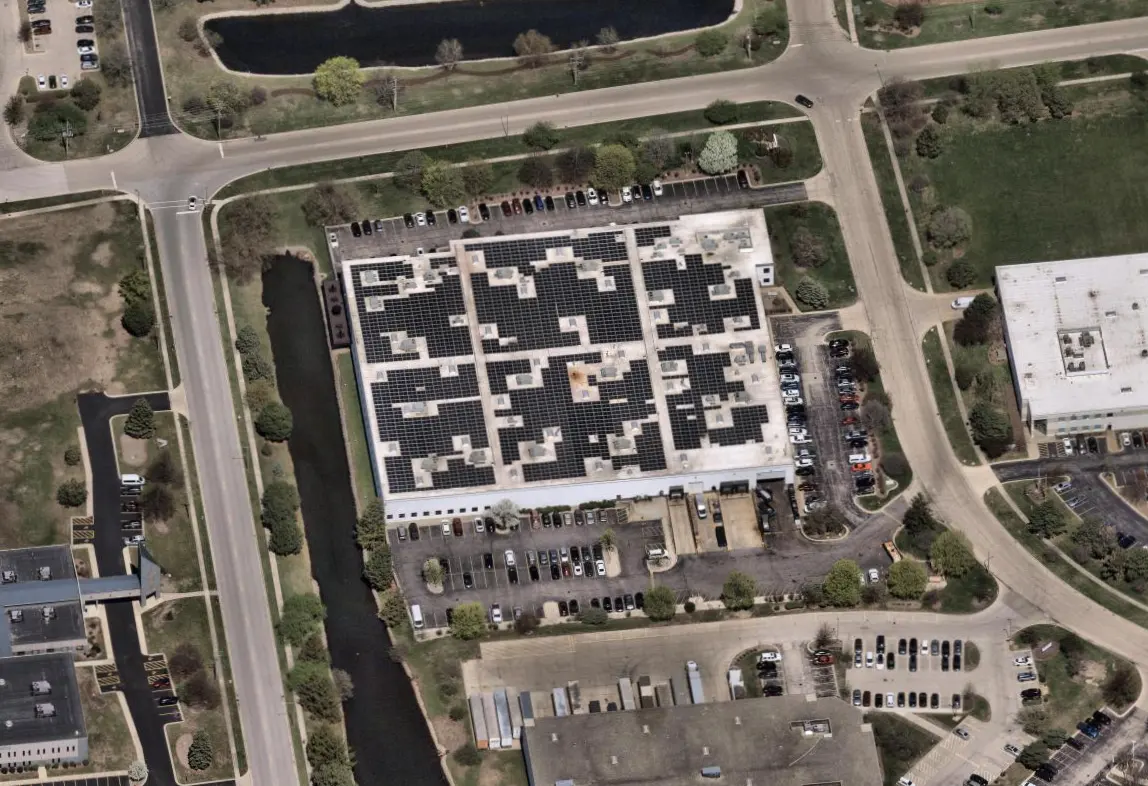
A manufacturer cannot control the PJM auction, the growth of data center load, or the pace of CRGA implementation. What a facility can control is how much grid power it buys, and when. That is where on-site generation changes the math. Solar shaves the energy you pull from the grid and trims the midday peak. Battery storage paired with that solar discharges during the highest-demand windows, which is what reduces the demand and capacity charges that are climbing fastest. It is a direct hedge against the exact line items driving Illinois bills up.
Timing is the other half of it. The federal solar Investment Tax Credit is still 30 percent, 40 percent in a qualifying Energy Community. The July 4, 2026 begin-construction deadline determined which placed-in-service runway a project gets, not whether the credit exists: a project that established its begin-construction date by then has until the end of 2030 to build, and a project starting now has until December 31, 2027. Establishing a begin-construction date requires committing about 5 percent of total project cost, and it does not commit the manufacturer to building. So the prudent sequence is to lock the economics now, while grid costs climb and the credit is at its current value, and then use the runway that applies to decide how and whether to build.
Establishing a begin-construction date is option-preservation, not a project commitment. Roughly 5 percent of project cost preserves the 30 percent federal credit (40 percent in a qualifying Energy Community) on the runway that applies, through the end of 2030 for projects that started by July 4, 2026, or through December 31, 2027 for projects starting now. With grid costs rising through 2027 and CRGA relief landing mostly later, locking in the on-site hedge at today's incentive value is the low-regret move. If the assessment shows the project does not pencil, the engagement ends there.
See What Rising Costs Mean for Your Facility
Twelve months of utility bills and a facility address. GEC will model your current demand and capacity exposure, show what on-site solar and storage would offset, and verify the federal and Illinois incentives that apply at your address. No commitment to move forward.
Frequently Asked Questions
The increase is driven primarily by capacity costs, not fuel. PJM Interconnection's capacity auction cleared sharply higher for the ComEd zone, moving from $28.92 to $329.17 per megawatt-day, and those costs flow into the supply and capacity components of commercial bills. ComEd's summer 2025 default supply reached 10.03 cents per kWh, the ICC approved a $243 million delivery rate increase effective January 2026, and ComEd's April 2026 filing proposes a summer 2026 supply charge about 12 percent higher again. The Citizens Utility Board has warned of a further 20 to 25 percent bill increase starting June 2026.
A capacity charge is what utilities pay to guarantee enough generation is available to meet peak demand. PJM sets that price for northern Illinois and MISO sets it for the Ameren footprint, both through annual auctions. Prices spiked because the 2025 PJM auction cleared at record levels for the ComEd zone, driven in part by fast-growing data center load raising peak demand. Higher capacity prices flow through to the supply and demand portions of commercial electric bills.
No. ComEd's Price to Compare (the default supply rate) applies to residential and most small commercial customers. Larger commercial and industrial facilities typically buy supply competitively, so they are not capped by that rate. They are still exposed to the same PJM capacity prices, which are embedded in competitive supply offers and in the capacity tags applied to demand-metered accounts. Larger facilities often feel the capacity increase most directly through their demand charges.
Mostly not yet. The Clean and Reliable Grid Affordability Act was signed in January 2026 and takes effect June 1, 2026, but its core measures (3 gigawatts of grid-scale storage by 2030, virtual power plant programs, time-of-use pricing, and a statewide resource planning process) deliver relief over the medium and long term. The Illinois Power Agency projects more than $13 billion in savings over 20 years. In the near term, through at least mid-2027, manufacturers remain exposed to the elevated capacity prices already built into current rates.
On a demand-metered commercial account, demand and capacity charges are billed on the facility's peak kilowatt draw and its capacity tags, and they often make up 30 to 60 percent of the total bill. Solar reduces the energy drawn from the grid and trims the midday peak. Battery storage discharges during the highest-demand windows, lowering the peak the utility measures and the capacity tag assigned to the account. Together they target the fastest-rising part of the Illinois commercial bill rather than just the energy portion.
Yes, because two things line up. Grid costs are rising structurally and most CRGA relief lands later, which strengthens the case for behind-the-meter generation. And the federal solar ITC is still 30 percent, plus the 10 percent Energy Community bonus where it applies: a manufacturer starting now establishes its own begin-construction date and must be placed in service by December 31, 2027, roughly eighteen months, by committing about 5 percent of total project cost. That commitment does not obligate the facility to build. It locks today's economics while the decision is made.
Get Ahead of the 2026 Cost Increases
ComEd and Ameren costs are climbing now, and CRGA relief is mostly later. GEC will model what on-site solar and storage would offset at your facility and verify which incentives apply. A project starting today has until December 31, 2027 to be placed in service and still capture the full federal credit. Start with 12 months of utility bills.